
Why an Improperly Chosen Dog Collar Can Harm Your Pet’s Health
Quick answers to key questions:
- ❌ An unsuitable dog collar can cause serious health issues: neck, spine, breathing, and skin problems.
- ✅ A properly chosen collar should be light, comfortable, and made of high-quality, safe materials.
- 🐾 For dogs that pull strongly on the leash or have breathing issues, harnesses are a better choice.
- 🌙 Extra safety – reflective details ensure your dog is visible during evening or nighttime walks.
- 👌 Petvilis offers breathable, quick-drying, and stylish solutions that keep your dog comfortable and safe.
Introduction: why the right choice matters
Many dog owners first choose a collar based on its look – color, pattern, or how it matches their dog’s personality. But a collar is not just an accessory. It’s an item that touches your dog every single day, affecting posture, movement, and even breathing.
While the right collar can be safe and comfortable, the wrong one can cause health problems. In this article, we’ll explore the risks of an unsuitable collar, how to avoid them, and when it’s better to use a harness instead.
What problems can the wrong collar cause?
1. Neck and spine injuries
A dog’s neck contains delicate muscles and spinal vertebrae. If a collar is too tight or too narrow, it can constantly press against the throat. This leads to muscle tension, pain, and even spinal damage.
The danger increases when a dog pulls on the leash. Sudden jerks place huge stress on the neck and may cause long-term issues such as herniated discs or spinal misalignment.
2. Breathing problems
A poorly fitted collar can press on the trachea, making it harder for your dog to breathe. The result? Coughing, wheezing, or even choking.
This is especially risky for brachycephalic breeds such as pugs, French bulldogs, and Pekinese. Their shorter airways already make breathing more difficult, and added pressure can be dangerous. In such cases, veterinarians often recommend harnesses instead of collars.
3. Risk of sudden injuries during walks
During walks, a poorly chosen collar can lead to injury. A dog that suddenly lunges forward or gets pulled back sharply puts its neck under significant strain.
Puppies and young dogs are particularly vulnerable, as their bones and muscles are still developing. Even small micro-injuries can turn into serious long-term issues.
4. Skin irritation and allergies
Collars made of poor-quality or rough materials can rub against the skin, causing redness, hair loss, or even wounds. Some materials may also trigger allergic reactions.
A dog experiencing discomfort may scratch excessively, rub its neck, or become irritable. That’s a clear sign the collar is not suitable.
How to choose the right dog collar
To prevent these problems, pay attention to several key factors.
Size and adjustability
The collar should be snug but not tight. The rule of thumb: you should be able to fit two fingers between the collar and your dog’s neck. Adjustable collars are best, as they can adapt to your dog’s growth or seasonal coat changes.
Material
Look for soft, breathable, and easy-to-clean materials that don’t cause irritation. For example, Petvilis offers collars made from 100% polyester, which are lightweight, durable, and quick-drying.
Weight
Especially important for small breeds – a collar should not be too heavy. The lighter it is, the more comfortable your dog will feel.
Extra safety
Reflective details are essential for evening or nighttime walks. They improve visibility and reduce the risk of accidents.
When is a harness better than a collar?
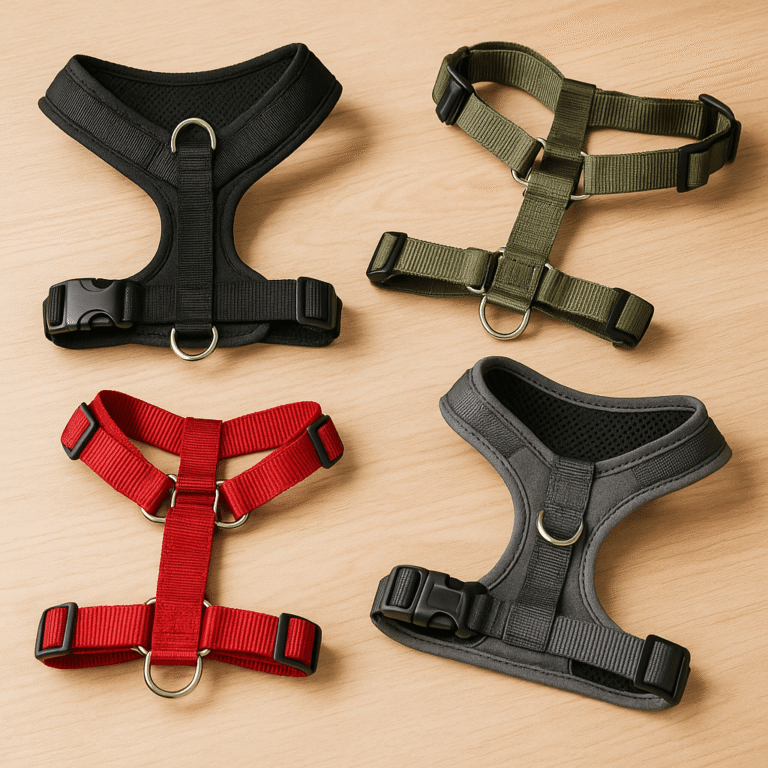
While collars work well for calm, well-trained dogs, harnesses are often the safer alternative.
Harnesses are recommended when:
- your dog pulls strongly on the leash,
- your dog is still a puppy learning to walk,
- your dog has breathing difficulties,
- you want to spread pressure across the chest instead of the neck.
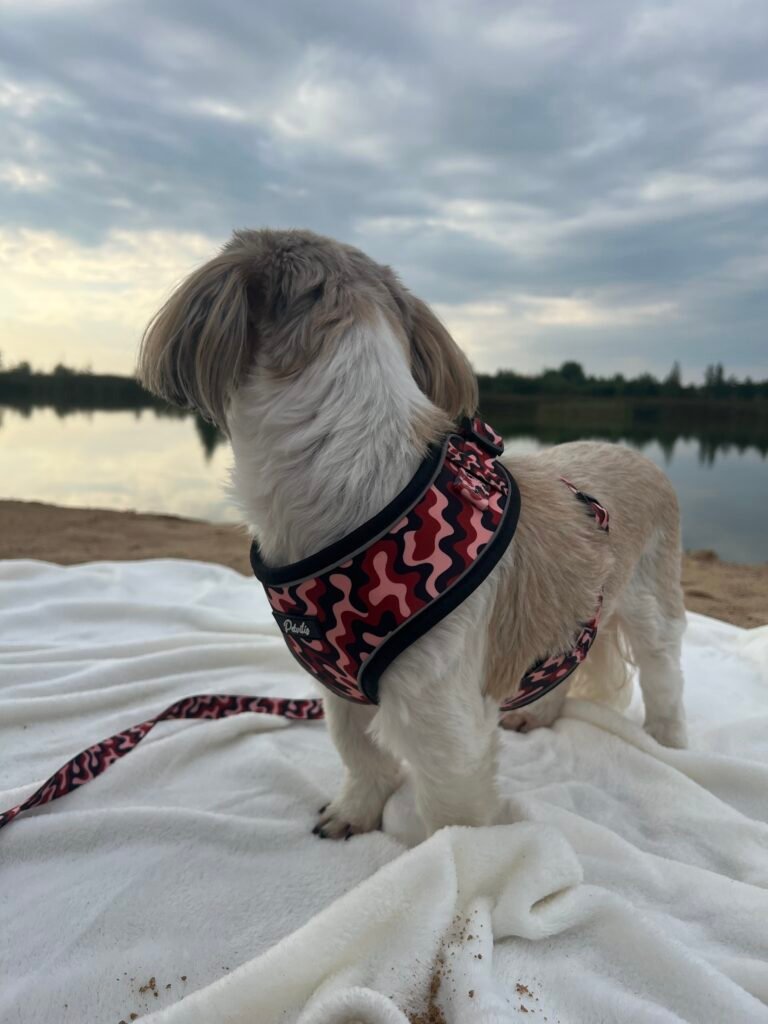
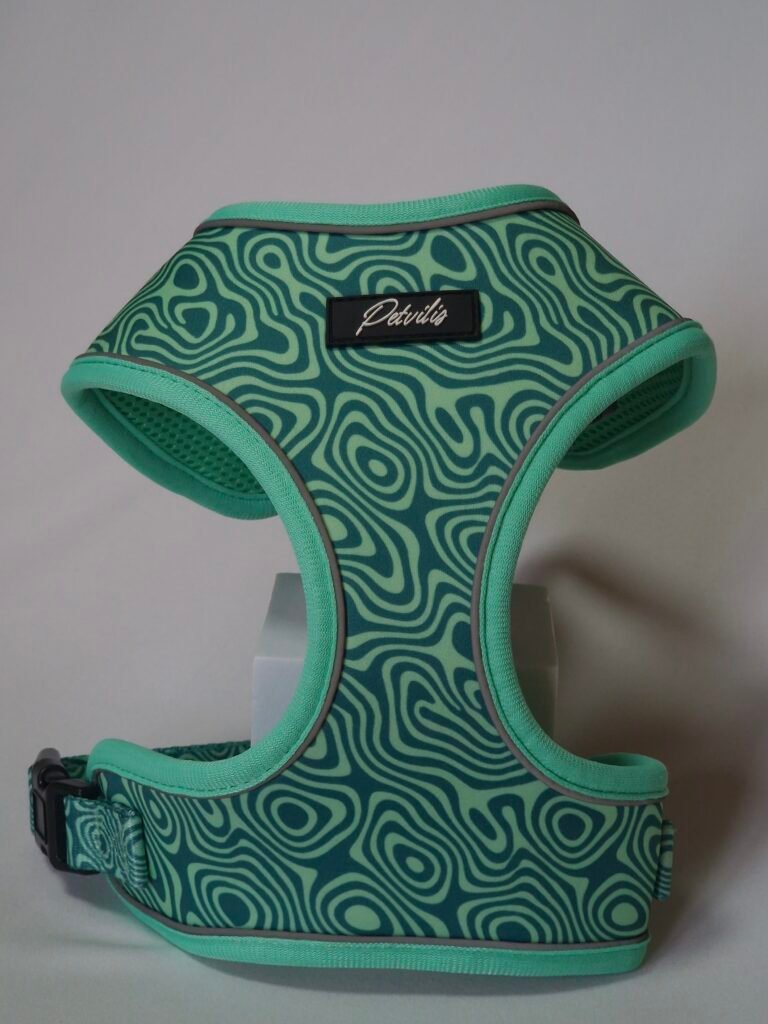
The Flow harness from Petvilis is a great example: breathable, quick-drying, and lightweight. It protects your dog’s health while adding a stylish touch.
Common mistakes owners make
To keep your dog safe, avoid these common collar mistakes:
- ❌ Choosing a collar that’s too tight (restricts breathing).
- ❌ Choosing one that’s too loose (easy to slip out of).
- ❌ Buying based on color only, without considering materials.
- ❌ Using the same collar for walks and training (different activities may require different gear).
- ❌ Forgetting to check for wear and tear or loss of durability.
How to care for your dog’s collar
Even the highest-quality collar needs care:
- Regularly check for signs of fraying or damage.
- Wash if it becomes dirty or develops an odor.
- In winter, clean off salt; in summer, dust and dirt.
- Remove it indoors so your dog’s skin can “breathe.”
Conclusion
An improperly chosen dog collar can be a serious risk to your pet’s health. From breathing issues to spinal injuries, the dangers are greater than many owners realize. That’s why the most important factors when choosing a collar are size, material, weight, adjustability, and safety features.
In many cases, harnesses may be a better option – distributing pressure and offering greater comfort.
👉 At Petvilis, you’ll find not only stylish but also practical collars and harnesses designed to ensure your dog’s comfort, safety, and well-being.