7/11/2026
Dog Harness or Collar: Which Is Right for Your Dog?
Quick answers to the most important questions
Properly fitted dog harnesses reduce strain on your dog's neck and provide greater comfort during walks.
For dogs that walk calmly without pulling on the leash, a high-quality collar is usually sufficient.
The most important thing is choosing the correct size harness or collar that does not restrict your dog's movement or cause discomfort.
Harnesses are generally recommended for puppies and small-breed dogs because they place less pressure on the neck.
A harness alone will not teach a dog to stop pulling on the leash—consistent training is the key to achieving the best results.
If you're still deciding which option is best for your pet, Petvilis offers both comfortable harnesses and high-quality collars to help ensure safe and enjoyable walks.
Dog Harness or Collar: Which Is Better?
When choosing walking equipment for your dog, many owners wonder whether a harness or a collar is the better option. There is no universal answer, as the best choice depends on your dog's age, breed, health, behavior, and walking habits.
Pros and Cons of a Collar
A traditional collar is a convenient and practical choice for everyday use. It allows you to attach an ID tag with your contact information, making it easier to identify your pet if they ever get lost. A collar is also quick to put on and remove, and since it doesn't cover much of the dog's body, it's especially comfortable during warm weather or short walks.
If your dog walks calmly on a leash and does not tend to pull, a high-quality collar in the correct size can be an excellent everyday option. It should be made from soft, durable materials, fit comfortably without putting pressure on the neck, and be easily adjustable to your dog's size.
However, if your dog pulls hard on the leash or suddenly lunges forward, all the force is concentrated on the neck. This can increase pressure on the trachea, cervical vertebrae, and even the eye area. In such cases, a collar alone is often not the best solution, and a harness—which distributes the pressure across the chest and shoulders—may be a better choice.
When choosing a collar, pay attention not only to its appearance but also to its size and materials. A properly fitted collar should not rub, squeeze, or restrict your dog's movement, ensuring comfort during both everyday walks and more active outings.
Benefits of a Harness
A harness distributes pulling force across the chest and shoulders, reducing strain on the neck. For this reason, harnesses are often recommended for:
Puppies
Small-breed dogs
Dogs with neck or respiratory issues
Dogs that pull strongly on the leash
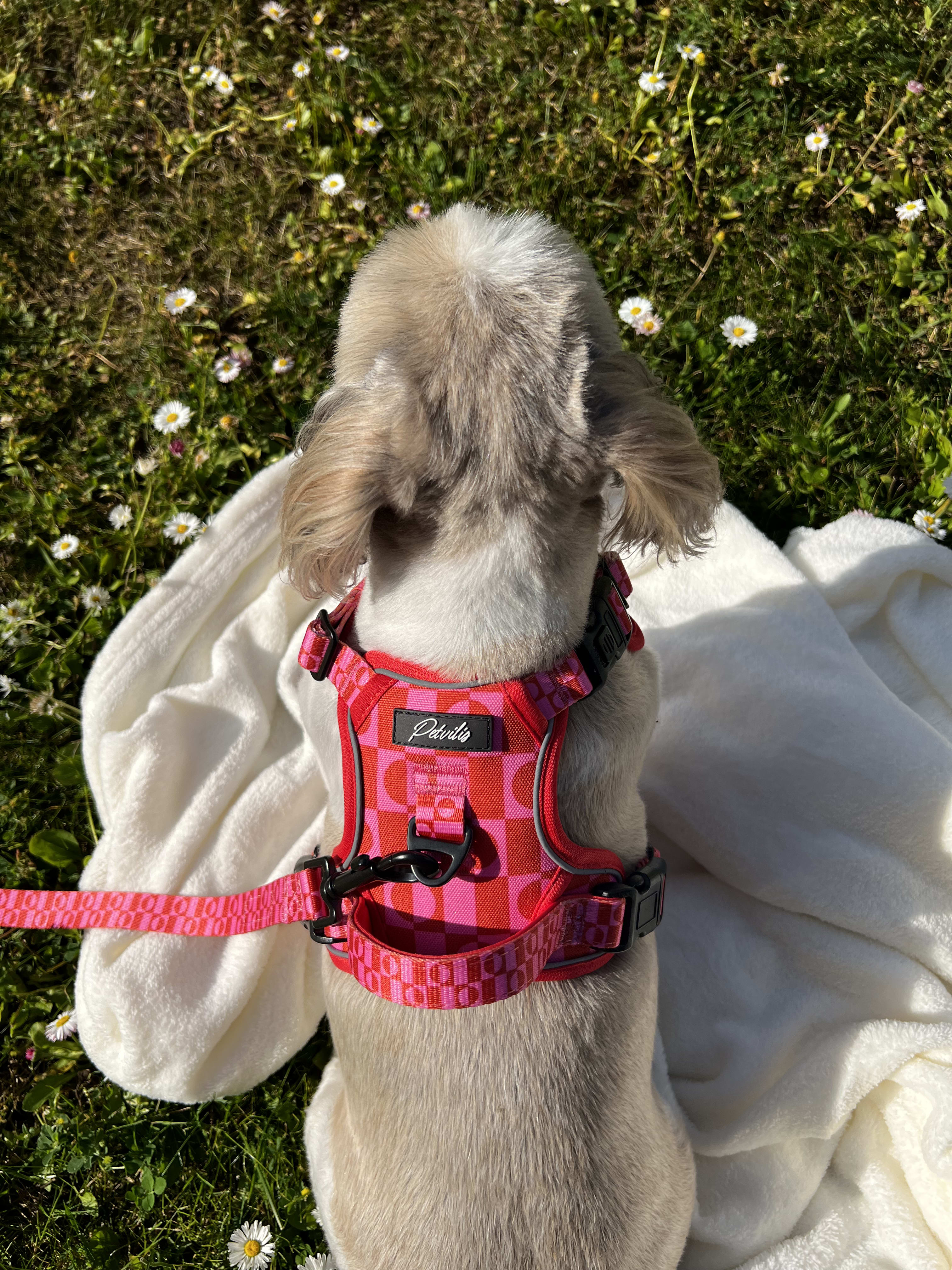
Another useful feature is a front D-ring attachment. When the leash is clipped to the front of the harness, it provides better control and makes it easier to redirect your dog when they pull.
Are There Any Downsides to Harnesses?
Yes. An incorrectly fitted or overly tight harness can restrict shoulder movement and reduce your dog's comfort. That's why it's essential to choose the correct size and a design that fits snugly without limiting natural movement.
For small breeds, you should be able to fit one finger between the harness and your dog's body. For large breeds, two fingers should fit comfortably.
When Should You Choose a Collar?
A standard flat collar may be the right choice if:
Your dog walks calmly without pulling.
Your dog has no neck or breathing problems.
You need a collar to hold an identification tag.
When Should You Choose a Harness?
A harness is generally recommended if:
Your dog pulls strongly on the leash.
Your dog has neck or respiratory issues.
You want to reduce strain on your dog's neck during walks.
The most important thing is to choose a properly fitted harness that does not rub against the skin or restrict movement.
Frequently Asked Questions
Can My Dog Wear a Harness All the Time?
Harnesses are designed for walks and active outdoor activities. When your dog is at home or resting, it's best to remove the harness so their skin and coat can breathe.
What Type of Harness Is the Most Comfortable?
The most comfortable harnesses are adjustable models that fit snugly without restricting shoulder movement while distributing pressure evenly across the body. Look for soft, breathable materials, durable buckles, and multiple adjustment points to achieve the best fit.
At Petvilis, you'll find harnesses designed to keep your dog comfortable during both short daily walks and longer adventures.
How Do I Choose the Right Harness Size?
To ensure your dog's harness fits comfortably without restricting movement:
Measure your dog's neck circumference and the widest part of their chest.
Compare the measurements with the size chart provided for your chosen harness model.
If your dog's measurements fall between two sizes, it is usually recommended to choose the larger size and adjust the straps for the best fit.
Petvilis harnesses feature adjustable straps, making them easy to fit dogs of different body shapes. A properly fitted harness should sit securely against the body without being too tight or restricting natural movement. Each Petvilis harness includes a detailed sizing chart to help you choose the right size based on your dog's measurements.
How Do I Choose the Right Collar Size?
Choosing the correct collar size is important for both your dog's comfort and safety.
To find the right size:
Measure your dog's neck where the collar will sit.
Compare the measurement with the size chart for your chosen collar.
The collar should fit comfortably, allowing two fingers to slide easily between the collar and your dog's neck. If it's too loose, your dog may slip out of it. If it's too tight, it can put pressure on the neck and cause discomfort.
When selecting a Petvilis collar, always refer to the sizing chart provided with each model to ensure the best fit for your dog.
Conclusion
There is no single solution that's perfect for every dog. If your dog walks calmly on a leash, a high-quality collar can be an excellent choice. However, if your dog tends to pull or has neck or respiratory issues, a properly fitted harness is usually the safer and more comfortable option.
The key is to consider your dog's individual needs and choose walking equipment that provides both comfort and safety.